

It started with a bet.
Was Beowulf boring or was it an exciting epic?
Michael Crichton’s friend thought Beowulf was a bore. Crichton wagered he could write a Beowulf story that was exciting.
He began almost immediately working on the manuscript. Most myths are based on reality. What could Beowulf be based on? Crichton wanted to create the progenitor story that was the basis for the epic poem.
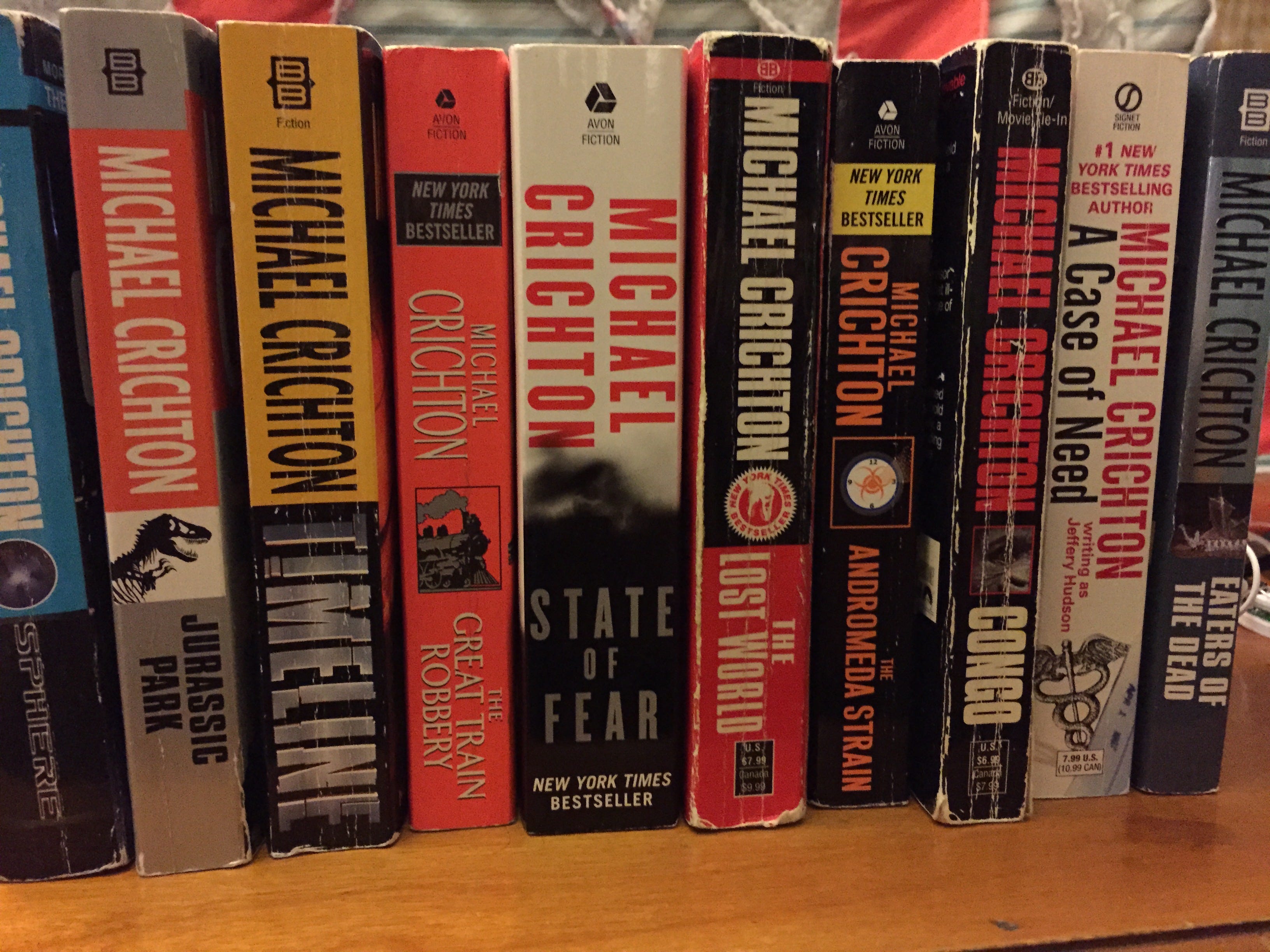
To do this, Eaters of the Dead is multilayered. The introduction is a fiction that suggests the reader is about to embark on reading the manuscript of Ahmad Ibn Fadlan. The intro states this is a “full and annotated version of the Fraus-Dolus translation.” A complete fiction. From here, we learn more about the narrator of the manuscript, the vikings and a bit about the history of the manuscript itself. It is essentially written straight-faced as a nonfiction work, with footnotes in the text that explain the translation, or historical background to continue the concept that this is a real manuscript.
Then, we begin the manuscript and almost immediately it feels as though we are actually reading an ancient text:
“PRAISE BE TO GOD, THE MERCIFUL, THE COMPASSIONATE, the Lord of the Two Worlds, and blessing and peace upon the Prince of Prophets, our Lord and Master Muhammad, whom God bless and preserve with abiding and continuing peace and blessings until the Day of the Faith!”
In the “A Factual Note On Eaters Of The Dead” at the end of the book, Crichton states that the first three chapters actually came from Ahmad Ibn Fadlan’s original manuscript. It is an edited down version which helps establish the narrator’s voice.
This falls into similar structure as Crichton’s The Andromeda Strain, which purports to be a narrative constructed of real-world events piece-mealed with classified documents and real-world reporting to lay credence to the Andromeda incident. As I’ve written in my review of The Andromeda Strain, I was not all too impressed. However, it works for Eaters of the Dead.
The verisimilitude is so believable to a point that Crichton wrote that he might have taken it too far.
The Plot
Eaters of the Dead takes place in the 10th century. The first chapter opens with Caliph of Baghdad, Ahmad Ibn Fadlan, who is sent on a mission as an ambassador but encounters norseman who enlist him as the reluctant 13th warrior on their quest to save another norse town from the “mist monsters” or the “Wendol” (Wendol, rhymes with Grendel). Through the journey Ibn Fadlan discusses the Norseman as an outsider, but slowly, he adopts their ways, and eventually, learns their language.
The First Read
Twenty years ago I purchased this current Eaters of the Dead version. I was fourteen and of course I didn’t appreciate it then, and never finished it. If you asked me then I would have said, “It was a bore” and Crichton would have lost his bet. Twenty years later, I feel quite differently about it. I flew through it. I read the last half of the book in one night. It was a late night that made the next morning regrettable.
Crichton said. “It’s an unusual book. Readers either like it, or they don’t.” I can understand that sentiment. There are some friends I would not recommend it to, knowing how they would struggle with the language, but there are other friends I know who would absolutely love it.
Maybe it’s because I have an anthropology background. Or I have a Master’s in English with a focus on Shakespeare. Maybe it’s because I read a lot of older texts, Stoic writers like Epictetus, Seneca, or Musonius Rufus. Or maybe it’s because I like Oxford World’s Classics and I‘m used to the real-life format of reading older works with lengthy introductions and brief author explanations and long footnotes (yes, this book has footnotes). It just works for me. It is wholly 100 percent on the conceit.
What would make folks wary of it is the style, not the story. If you read The Andromeda Strain and then picked this up with its bible-like style (and the footnotes), you would be lost.
The Verdict
From the concept, to the execution, Eaters of the Dead is by far one of my favorite Crichton books. It is up there with Sphere, Travels and Jurassic Park. Though its reception was mixed, Crichton succeeded in his wager, and produced something that is not only entertaining, but more so than Beowulf. It took some time to get into it, but about halfway through I couldn’t put it down; for a book, that is the best compliment.
Rating: 5 out of 5 stars
★★★★★
Definitely an intriguing take! I don’t have this one but should pick it up!